Wireless monitoring of a landfill in New Jersey, USA
Challenge
Pollution from landfills can be a serious environmental hazard. That’s why in 2017 the New Jersey Department of Environmental Protection authorized remedial actions to cap and contain pollution at the Municipal Sanitary Landfill Authority (MSLA) 1D landfill located just off the New Jersey Turnpike in the town of Kearny.
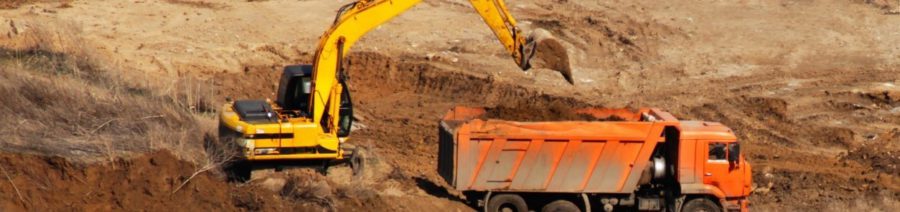
The work comprised two main actions: leachate control to mitigate contamination of surface water and groundwater, and landfill capping to control gas emissions, prevent direct contact with contaminated materials, and reduce leachate generation.
The project owners needed to make sure the impermeable cap over the landfill remained stable during construction, which was anticipated to last up to two years. This was to be done by monitoring the pore water pressure and lateral movement within the soil.
Solution
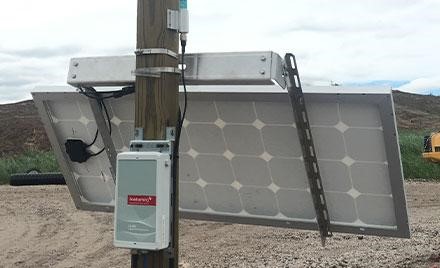
Worldsensing’s distribution partner, Specto Technology, worked with Vibranalysis to add Worldsensing digital loggers to chains of digital in-place inclinometers and vibrating wire piezometers installed within the soil of the landfill.
The IoT remote monitoring solution uses LoRa, a long-range, low-power wireless technology used by IoT networks worldwide. It has a proven range of up to to nine miles or 15 kilometers and a battery life of up to 10 years. The technology is also robust, easy to install and significantly less expensive than cabled systems or manual monitoring.
Worldsensing uses a star network topology which has a long range, is not affected by radio signal obstructions, does not need repeaters or network planning and is not critical-path dependent.
Benefits
Landfills are still among the most common waste management methods in most cities and the use of advanced technologies may help mitigate their environmental and health risks. Although leachate control and treatment are considered as standard procedures for maintaining landfills, the use of wireless monitoring helps MSLA have a real-time view and time series of pore water pressure and horizontal displacement in depth during the construction. This, in turn, helps to immediately implement remedial actions to prevent water contamination and pollution, if needed.
Are you planning a project?
Get in touch with us to share your needs and project requirements. We are experts in engineering and IoT and are happy to help.